


Send Message
Privacy statement: Your privacy is very important to Us. Our company promises not to disclose your personal information to any external company with out your explicit permission.
In the automotive manufacturing industry, many key components with rotational or reciprocating motion cannot do without reliable sealing guarantees—such as the output shaft of thecar transmission, the hydraulic push rod of the braking system, and the related moving parts of the engine, etc. Once the automotive rubber seal fails, it will result in oil leakage and component wear at the least, and at the worst, it will affect braking safety, cause engine failure, and significantly increase maintenance costs. The V-shaped combined sealing ring is a "powerful helper" in solving such sealing problems in automotive manufacturing. It is not a single sealing ring, but a "combination punch" type of automotive sealing system.
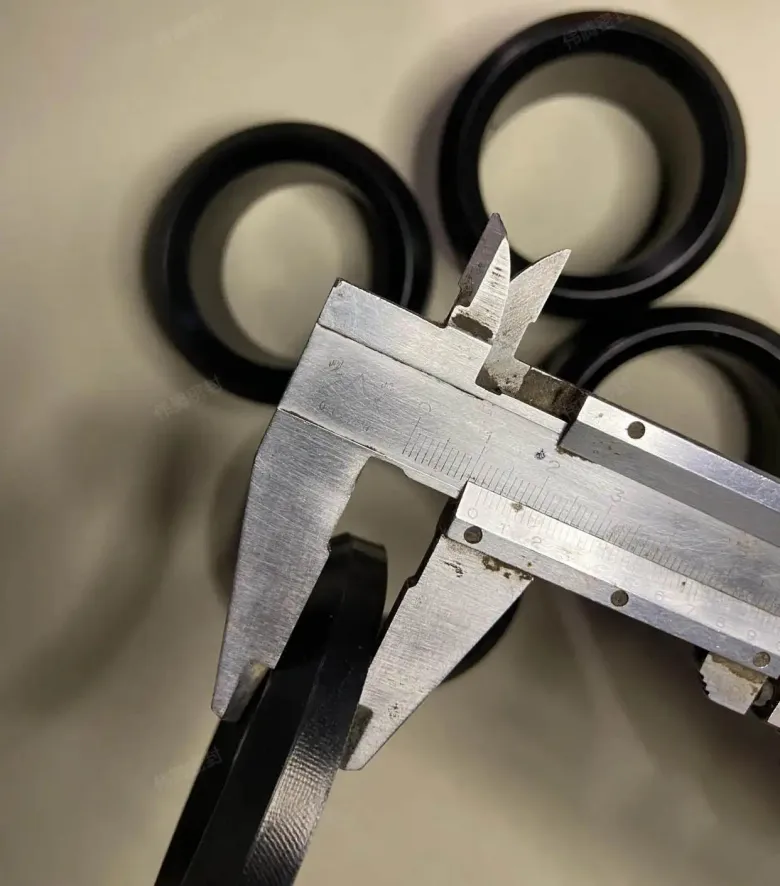
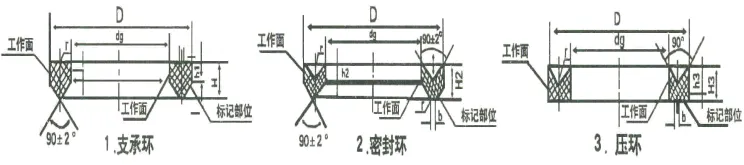
Unlike the single structure of ordinary sealing rings, the V-shaped combined sealing ring is composed of three parts: "pressure ring + sealing ring + support ring", each part performing its own function. Only when they work together can reliable sealing be achieved, just like a "sealing team" for automotive dynamic sealing scenarios.
Pressure ring: The "transmitter" of pressure is located on the side close to oil, water and other media (that is, the pressure side), and its material is usually high-strength materials such as metal or hard plastic. Its core function is to catch the pressure of the medium and then evenly transfer the pressure to theautomotive sealing ring behind it, avoiding pressure concentration that could lead to seal failure.
Sealing ring: Core "Sealing hand" This is the key to the entire system, usually composed of 2 to 4 layers of V-shaped cross-section elastomers stacked together, and the materials are mostly nitrile rubber (NBR), fluororubber (FKM) or polyurethane (PU). The V-shaped opening will face the pressure side directly, just like a "lip that can tighten automatically"—a typical feature of self-sealing rubber seals. Moreover, the number of layers can be adjusted according to the pressure. The higher the pressure, the more layers can be superimposed, and the more guaranteed the sealing effect will be for high-pressure automotive applications.
Support ring: The "strong backing" at the back is located on the side away from pressure, and its material is similar to that of the pressure ring. Its function is to prevent the automotive elastomeric seal from being squeezed into the equipment gap under high pressure (that is, the "extrusion" phenomenon), and at the same time help the sealing ring maintain a stable shape to avoid deformation and affect the sealing effect.
After these three parts are assembled, the sealing ring itself will have a slight "interference fit"—simply put, its size in the free state is slightly larger than the installation groove, and it will naturally adhere to the sealing surface after assembly. In addition, under the effect of pressure, the V-shaped lip will open outward and inward, tightly adhering to the shaft and the hole wall, forming a bidirectional automotive seal that prevents both internal and external leakage.
Compared with traditional O-rings and other seals, V-shaped combined sealing rings can be widely used in many key components of automotive manufacturing, all thanks to these core advantages, especially suitable for the rotational, reciprocating motion andhigh-pressure working conditions of automotive parts:
Its most prominent advantage is its self-sealing ability that becomes tighter and tighter the more it is pressed! The higher the medium pressure, the greater the force transmitted from the pressure ring to the sealing ring, and the stronger the V-shaped lip adheres to the sealing surface. There is no need to worry about leakage under high pressure at all. Even the pressure fluctuations during the operation of the equipment can be dealt with steadily. For instance, after using it in the hydraulic pipeline sealing of the car braking system, it can ensure that the brake fluid does not leak, guarantee the reliability of the braking system, and build a solid defense line for driving safety.
It can withstand and adapt to various automotive harsh working conditions. Whether it is high temperature (ordinary materials can withstand -35℃ to 120℃, and special materials such as fluororubber can withstand over 180℃), high pressure (up to 60MPa), oil, water, some chemical media, or even harsh environments containing sand, it can all handle them. Moreover, it has a high tolerance for installation errors of the equipment shaft and hole, as well as eccentric offset during operation, and can work normally without pursuing the ultimate processing accuracy—greatly reducing the requirements for automotive component machining.
Wear-resistant and durable, with an extremely long service life. The elastomer material used for the sealing ring itself is tear-resistant and anti-aging. Coupled with the support ring, it can prevent excessive deformation and wear, significantly extending its service life. For instance, when the output shaft of a car's transmission is replaced with a V-shaped combined sealing ring, it can effectively resist the erosion of gear oil and the wear caused by shaft rotation. Its service life is several times longer than that of traditional sealing parts, reducing the frequency and cost of vehicle maintenance.
Installation and maintenance are extremely worry-free. It has a compact structure and does not require complex tooling. Just install it in the order of "pressure ring + sealing ring + support ring". What's more considerate is that when worn out, the automotive rubber sealing elements inside can be replaced separately instead of as a whole. If it cannot be installed axially, it can also be disconnected. During installation, the cut edges can be staggered, which will not affect the sealing effect at all and greatly save maintenance time and costs for automotive seal replacement.
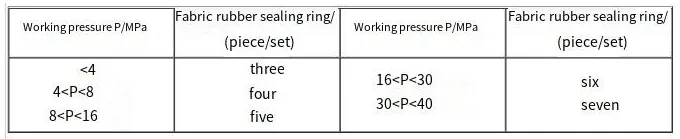
Reasonable selection of automotive seal materials is the key to ensuring sealing effect: Nitrile rubber (NBR) can be used for ordinary oil conditions, polyurethane (PU) is recommended for high-pressure and wear-resistant scenarios, and fluororubber (FKM) is suitable for high-temperature or corrosive medium environments. The pressure rings and support rings are usually made of hard plastic or metal to ensure sufficient compressive resistance and prevent deformation and failure.
Do not install in the wrong direction: The V-shaped opening must face the medium pressure side so that the pressure can push the lip tightly against the sealing surface. If it is installed in reverse, not only will theautomotive seal fail, but the sealing ring may also be damaged.

November 14, 2025
November 27, 2025
December 10, 2025
In the grand industrial landscape, our eyes are often drawn to huge turbines, precise chips or dexterous mechanical arms. However, deep within these colossal or complex systems, there are often som
In the end face contact seal (mechanical seal) systems of rotating mechanical equipment such as pumps, compressors, and reactors, rubber sealing parts are key components on an equal footing with dy
O-Rings are critical sealing components utilized across various industries, yet their failure can result in significant challenges, including leaks and equipment damage. Understanding the eight pri
The Pili Seal, developed by aeronautical engineer Mark Kennedy Bantugon, was inspired by his childhood experience of using chewed gum to seal roof leaks during heavy storms in Mabini, Batangas. Thi
Email to this supplier
November 14, 2025
November 27, 2025
December 10, 2025
Tel: 86-86-07523739636
Whatsapp: +86 15976889589
Address: Wanli Industrial Zone, Zhenlong Town, Huiyang District, Huizhou, Guangdong China
Privacy statement: Your privacy is very important to Us. Our company promises not to disclose your personal information to any external company with out your explicit permission.
Fill in more information so that we can get in touch with you faster
Privacy statement: Your privacy is very important to Us. Our company promises not to disclose your personal information to any external company with out your explicit permission.