




Send Message
Privacy statement: Your privacy is very important to Us. Our company promises not to disclose your personal information to any external company with out your explicit permission.
In the end face contact seal (mechanical seal) systems of rotating mechanical equipment such as pumps, compressors, and reactors, rubber sealing parts are key components on an equal footing with dynamic rings, static rings, and compensation mechanisms. With its elastic deformation characteristics and the ability to adapt to multiple working conditions, precision rubber seals fill structural gaps, stabilize sealing conditions, and resizes complex environments, laying a solid foundation for the reliable operation of end face seals. It is an important support for the sealing system to achieve low leakage and long service life.
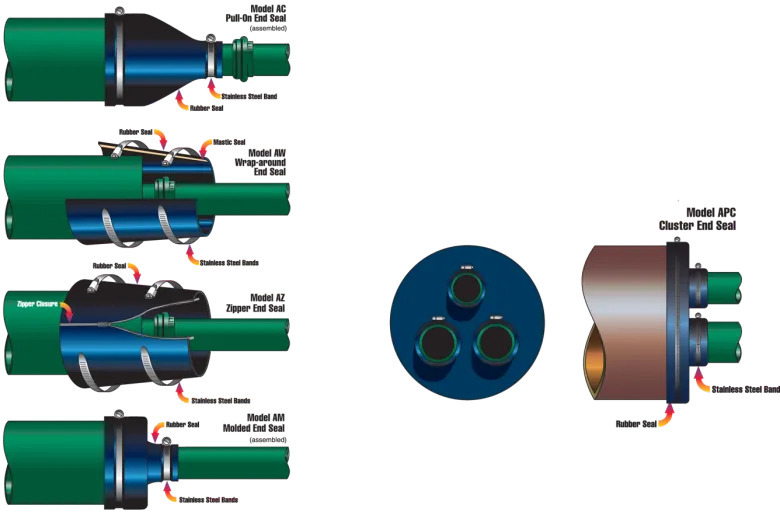
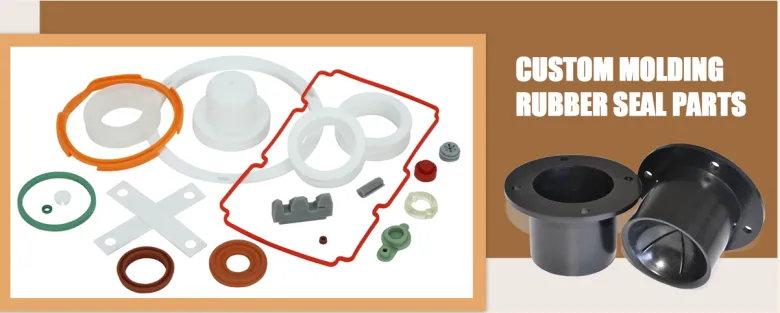
The core sealing surface of the end face contact seal is the precise fit between the moving ring and the static ring. However, the assembly clearance between the equipment housing, the shaft sleeve and the sealing components, as well as the axial movement and radial runout during the shaft operation, will leave hidden dangers for medium leakage. Rubber sealing parts (O-rings, V-rings, wedge-shaped rings, etc.) achieve all-round sealing through their own elasticity, tightly filling the fit clearances between the shell and the static ring, as well as between the shaft sleeve and the dynamic ring, directly blocking the channels for the medium to leak from non-end face areas.
For the slight displacement and vibration of the shaft, the sealing pressure is continuously maintained through elastic rebound to prevent leakage caused by the formation of gaps.
Isolate external dust, water vapor and other impurities to prevent them from entering the sealing end face and damaging the liquid film lubrication, and protect the friction pair from scratches and wear—effectively extending the service life of mechanical seal components.
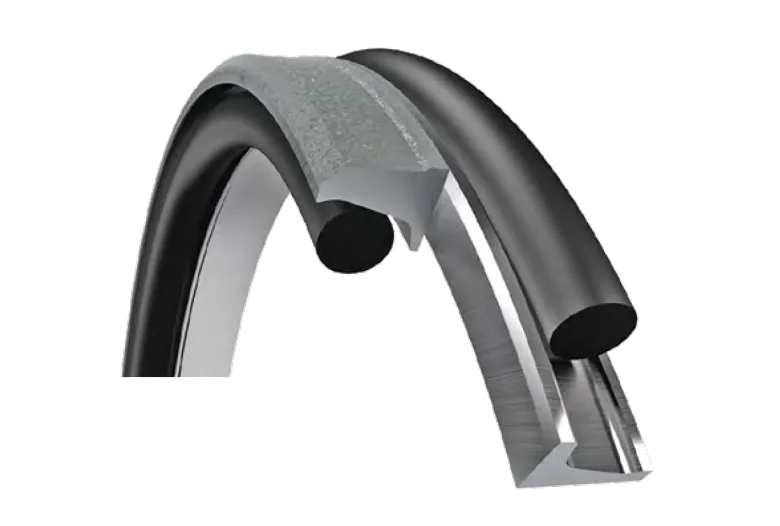
The long-term operation of end face seals depends on the stability of the bonding pressure between the sealing end faces. Rubber seals work in coordination with compensating mechanisms such as springs to play a crucial role in buffering and compensation.
Absorb the wear of the sealing end face during operation and the minor errors generated during installation, and assist in maintaining the contact state between the moving ring and the static ring.
Buffer the impact load during the start-up and shutdown of the buffer equipment to prevent seal failure caused by sudden changes in end face pressure and extend the service life of the friction pair.
Its elastic characteristics can adapt to pressure changes under different working conditions, ensuring that the sealing system can still maintain stable performance when the load fluctuates—highlighting the working condition adaptability of rubber sealing parts.
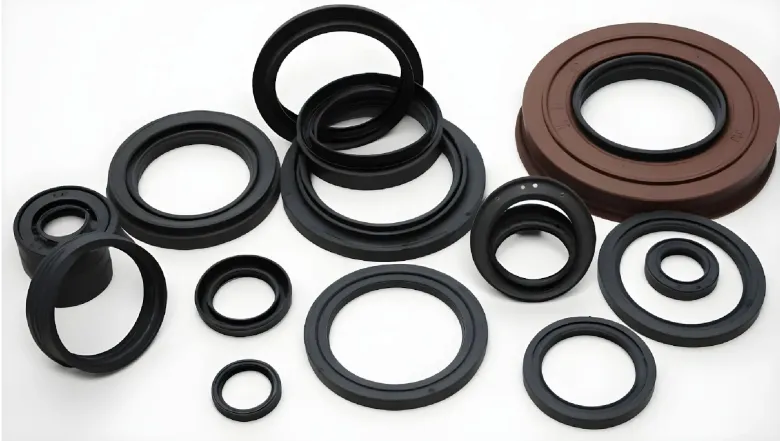
The operating environments of industrial equipment vary significantly. Different working conditions such as high temperature, high pressure, strong corrosion, and sanitary requirements have put forward targeted demands for sealing materials. Rubber seals, through the differentiated optimization of material properties, meet the adaptation requirements for various scenarios:
FKM fluoroelastomer and FFKM perfluoroelastomer can withstand temperatures above 200℃ and strong acid and alkali media, making them suitable for the sealing requirements of petrochemical equipment and high-temperature equipment. silicone rubber and EPDM rubber comply with FDA standards, are odorless and pollution-free, and are suitable for sanitary-grade sealing in the food and pharmaceutical industries.
NBR nitrile rubber and HNBR hydrogenated nitrile rubber have excellent wear resistance and oil resistance, and are suitable for working conditions such as mechanical manufacturing and hydraulic system sealing.
Under low-temperature conditions, specialsilicone rubber and fluorosilicone rubber can maintain their elasticity and prevent seal failure caused by brittle cracking at low temperatures—adapting to cold region industrial equipment needs.
The performance of rubber sealing parts depends on the accuracy of material selection and the reliability of the production process. The performance requirements for rubber materials vary significantly among different industries and equipment:
In the petrochemical industry, particular attention should be paid to the aromatic hydrocarbon resistance and high pressure resistance of rubber materials to prevent the medium from causing rubber swelling and cracking.
Under high-temperature working conditions, the material's high-temperature aging resistance is the core, and it is necessary to prevent the loss of elasticity under long-term high-temperature conditions.
For low-pressure and normal-temperature clean water pumps and other equipment, NBR nitrile rubber and ordinary EPDM rubber with higher cost performance can be selected to balance the sealing effect and cost.
In the production process, high-purity rubber base materials can prevent impurities from affecting elasticity and weather resistance. The precision rubber molding process can ensure dimensional accuracy and surface finish, meeting the assembly requirements of sealing systems.
For special working conditions, formula optimization and the addition of wear-resistant, heat-resistant and anti-aging additives can further enhance the specific performance of rubber parts and meet the long-term operation requirements of end face seals.
The failure of the end face sealing system is often directly related to the performance degradation of the rubber sealing parts. Problems such as insufficient elasticity, poor medium resistance, and rapid aging can lead to leakage in the gap and imbalance of sealing pressure, which in turn causes accelerated end face wear, sealing failure, and ultimately results in equipment shutdown for maintenance.
High-quality rubber sealing parts, through stable material properties and precise manufacturing, can effectively reduce the failure probability of the sealing system, extend the equipment maintenance cycle, and provide a guarantee for the continuous operation of industrial production. Its fundamental supporting role in the end face sealing system makes it one of the key components that affect the stability and economy of equipment operation—proving that precision rubber seals are the core of reliable industrial sealing systems.

November 14, 2025
In the automotive manufacturing industry, many key components with rotational or reciprocating motion cannot do without reliable sealing guarantees—such as the output shaft of thecar transmission
O-Rings are critical sealing components utilized across various industries, yet their failure can result in significant challenges, including leaks and equipment damage. Understanding the eight pri
In the grand industrial landscape, our eyes are often drawn to huge turbines, precise chips or dexterous mechanical arms. However, deep within these colossal or complex systems, there are often som
The Pili Seal, developed by aeronautical engineer Mark Kennedy Bantugon, was inspired by his childhood experience of using chewed gum to seal roof leaks during heavy storms in Mabini, Batangas. Thi
Email to this supplier
November 14, 2025
Tel: 86-86-07523739636
Whatsapp: +86 15976889589
Address: Wanli Industrial Zone, Zhenlong Town, Huiyang District, Huizhou, Guangdong China
Privacy statement: Your privacy is very important to Us. Our company promises not to disclose your personal information to any external company with out your explicit permission.
Fill in more information so that we can get in touch with you faster
Privacy statement: Your privacy is very important to Us. Our company promises not to disclose your personal information to any external company with out your explicit permission.